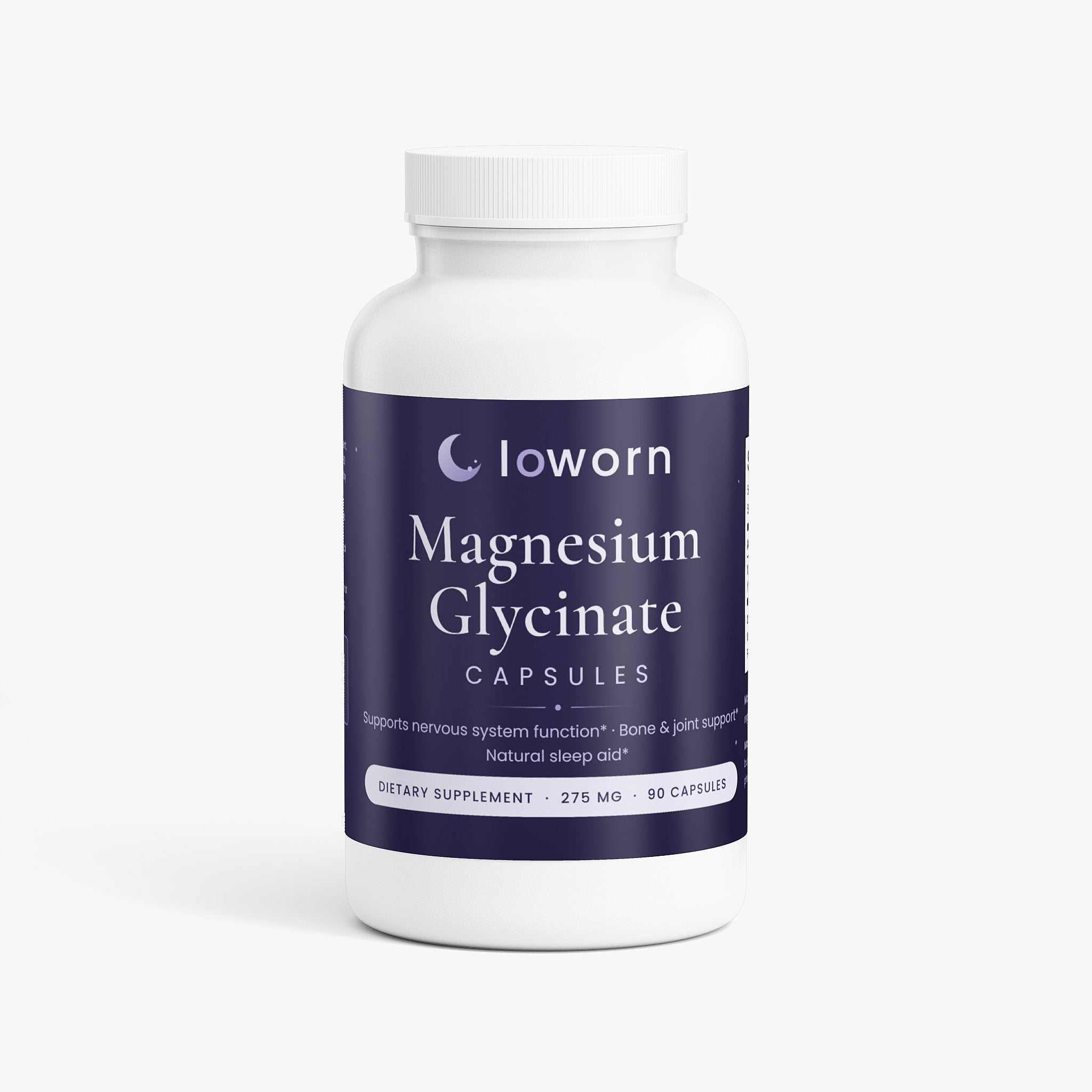
Magnesium Glycinate Capsules
Supports nervous system function, bone & joint health, and natural sleep.* 275 mg elemental magnesium per 3-capsule serving.
How to take+
Take three (3) capsules once daily with water, ideally 30–60 minutes before bed or with your evening meal. Do not exceed the recommended dose.
Shipping & returns+
Orders are processed in 3–5 business days and ship from our US fulfillment center; delivery takes another 2–4 business days with USPS. Shipping is free on every order. Supplements are consumables, so we can't accept change-of-mind returns, but damaged, defective, or incorrect orders are replaced or refunded in full within 30 days.
Warnings+
Consult a physician before use if you are pregnant, nursing, taking medication, or have a medical condition. Keep out of reach of children.
Benefits of magnesium glycinate
A highly absorbable form of chelated magnesium.*
Two ingredients that matter. Nothing that doesn't.
Magnesium — a cofactor in over 300 enzymatic reactions: nerve signaling, muscle relaxation, bone mineralization, and energy metabolism. Around 60% of the body's magnesium is stored in bone.*
Glycine — the amino acid it's bound to. Glycine is itself a calming neurotransmitter, studied for its role in sleep onset and quality. The chelation isn't just a delivery mechanism — it's a second active.*
The science behind the mineral.
Magnesium is one of the most studied minerals in human nutrition. A few places to start, if you like reading the research yourself.
A systematic review of randomized trials found that magnesium supplementation may benefit people with mild-to-moderate symptoms of daily stress — fatigue, irritability, restless nights.
Boyle et al., Nutrients, 2017 — View the study →Around 60% of the body's magnesium is stored in bone. Research links chronically low magnesium intake with lower bone mineral density.
Castiglioni et al., Nutrients, 2013 — View the study →A meta-analysis of prospective cohort studies found higher dietary magnesium intake associated with a modestly lower risk of stroke.
Larsson et al., Am J Clin Nutr, 2012 — View the study →Magnesium is a cofactor in over 300 enzymatic systems — energy metabolism, nerve signaling, muscle contraction, and protein synthesis among them.
de Baaij et al., Physiological Reviews, 2015 — View the study →Studies are provided for general education about the mineral, not as claims about this product. *These statements have not been evaluated by the Food and Drug Administration. This product is not intended to diagnose, treat, cure, or prevent any disease.
Glycinate vs. the forms on most shelves.
What's not in it matters too.
*These statements have not been evaluated by the Food and Drug Administration. This product is not intended to diagnose, treat, cure, or prevent any disease.